Where does your home hold feeling?
A Nook
A Small Corner That Holds You Close
Often holds Restoration Stimulation
In your a nook the mix may be different. Why the aspects vary
The a nook's emotional topography
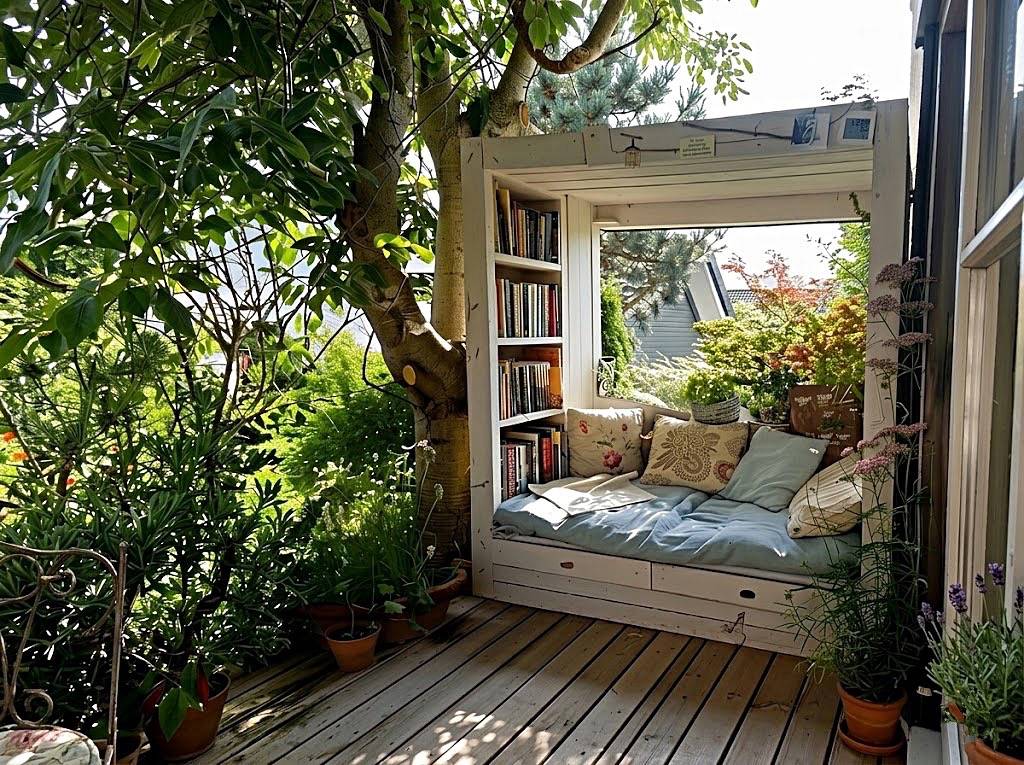
A soft glow of afternoon light. A tucked-away corner. The feeling of being held close by the space itself. This is the nook—small, enclosed, and inviting in ways larger rooms aren't.
Maybe you already have one. A window seat where you read or journal. A breakfast nook where morning feels slower. A corner with cushions where you sketch or sit with your thoughts. Or maybe you don't—maybe the corners in your home are filled with clutter, or feel too small or awkward to use, or have just been overlooked. But nooks aren't found, they're made. That corner by the bookshelf could hold a chair. The spot under the stairs could have cushions and a lamp. The bay window that's collecting boxes could become somewhere you actually sit.
A nook doesn't require much, just intention. A comfortable seat. Good light. A sense of enclosure (walls on two or three sides, or a defined boundary). The willingness to claim a small space as yours. Once the container exists, the room around it reorganises itself. The smallness isn't limiting—it's protective. Close quarters turn attention inward. The pace drops. Detail comes forward.
Restoration
The nook offers refuge. The enclosed feeling is comforting, not confining. Maybe you come here when you need quiet, to read, to think, to let your mind settle. Or to write down something you're workingn out. Or to sit with your partner in the morning, coffee in hand, before the day begins. The intimacy of the space slows things down. You linger here. Time moves differently in small, protected corners you've claimed for yourself.
Stimulation
But the nook is also a starting place. The cozy boundaries help you focus inward, where imgination has room, where ideas form before they're tested, where reflection deepens. It's where you write without distraction. Where you sketch ideas that are just forming. Where daydreaming leads somewhere unexpected. Where conversation becomes more intimate because you're sitting close. The nook's enclosure doesn't limit, it concentrates your attention on what's in front of you.
The nook is small, but once you create it, it makes room for the rest of you.
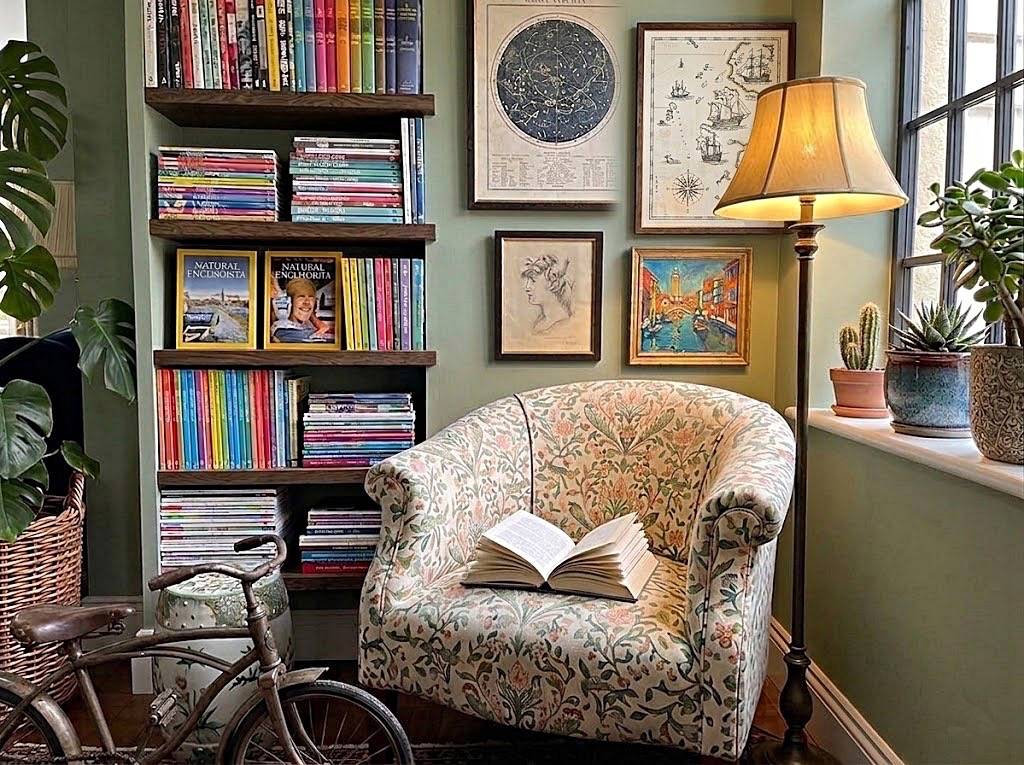
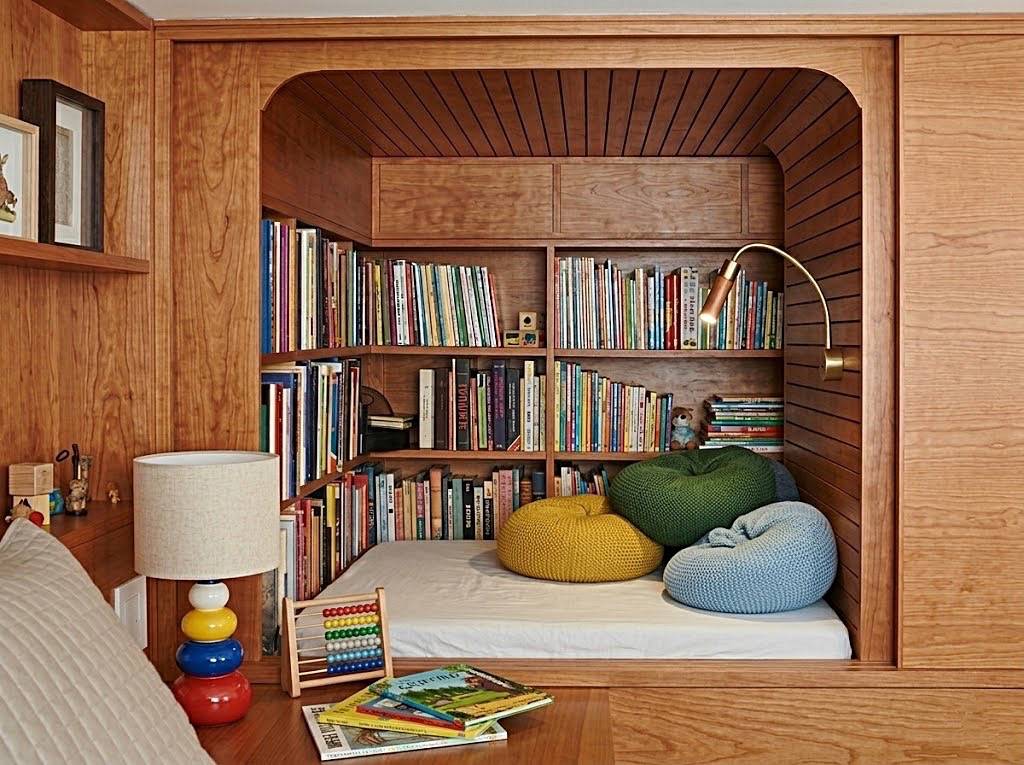
Is there an overlooked or underused corner in your home that you could transform into a nook?
- What would it make room for —rest, reflection, or the kind of thinking that needs quiet ?
Scents to explore for your nook
The nook is small around the body and large within. A scent here belongs to both: the held space, and the interior it opens up.
Sandalwood
Creamy, dense, slow. The wood of long afternoons. Reads as quiet without being soporific.
Clary Sage
Herbaceous and going heady in the warmth. A scent that goes with thinking, not relaxation exactly, but a kind of inward attention.
Cedarwood
Dry, woody, faintly resinous. The smell of warm timber. Sits well in a corner already lined with books.
Bergamot
Bright citrus with a soft bitter edge. Lifts the air without making it busy. Useful when the nook is for writing or sketching rather than rest.
One oil is enough in close quarters. Composed Self-Place Bond synergy blends for rooms like this one are being remade: the second edition is in development.
The 4 on the scent wheel
- Sandalwood Woody · base note
- Clary Sage Herbaceous · middle note
- Cedarwood Woody · base note
- Bergamot Citrus · top note
Explore other spaces
The spaces here are conceptual examples. Yours will look different, and that difference is part of what makes it yours.