Where does your home hold feeling?
Living Room
The Heartbeat of Home
Often holds Kinship Stimulation
In your living room the mix may be different. Why the aspects vary
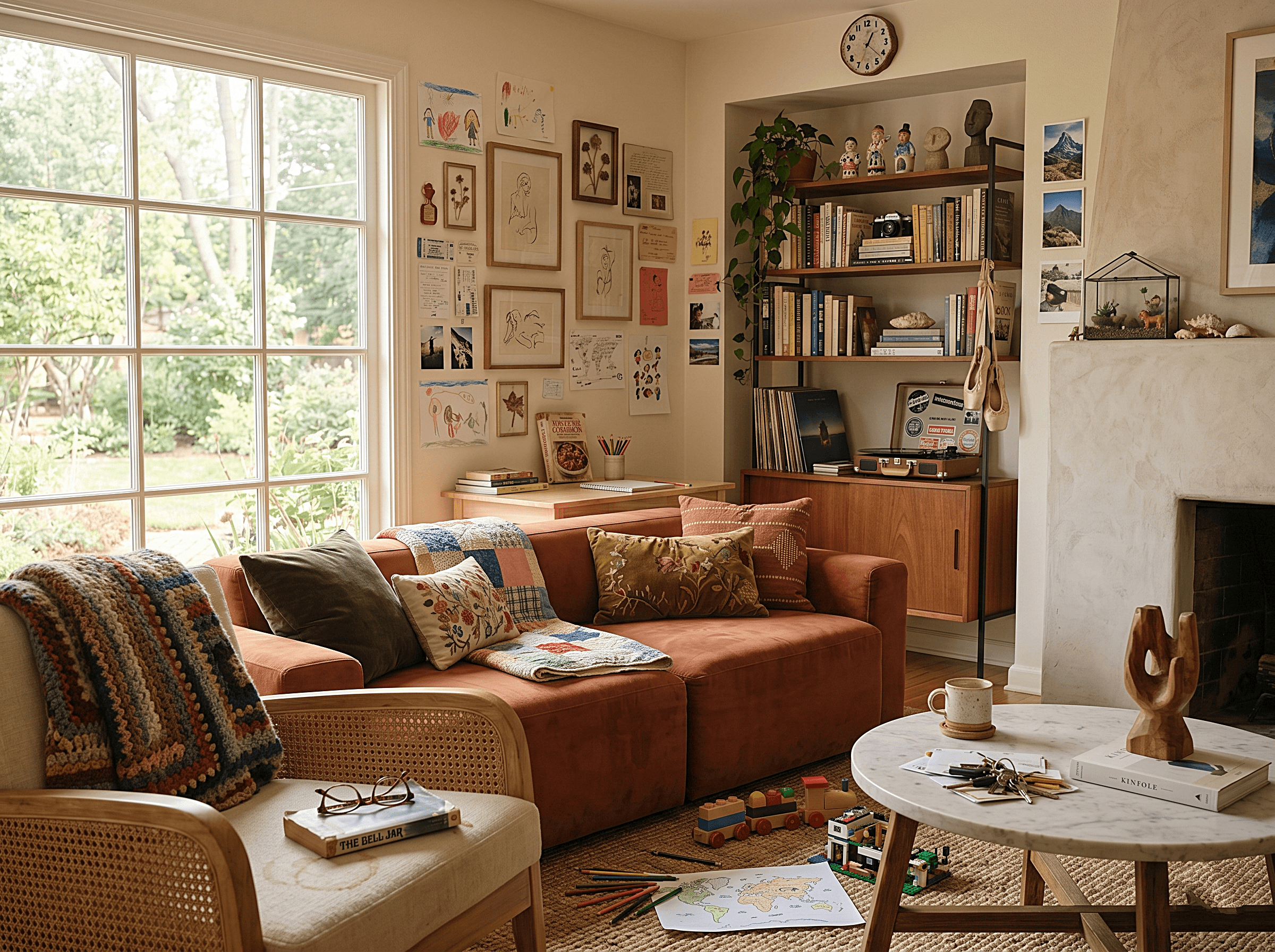
The living room's emotional topography
Morning stillness when light slants across the floor and no one else is awake. Afternoon energy when people gather and voices overlap. Evening quiet when you sink into the couch alone, grateful for the day to be over. Late-night conversation when time stops mattering.
Your living room holds all of these. And if you pay attention, you'll notice your body knows which version the room is offering. Morning living room asks for gentleness. Afternoon living room opens your chest. Evening living room lets you collapse. Late-night living room invites honesty.
Past the time-of-day, the living room is also a room of things, and the presence of loved ones lingers in it long after the room falls silent. The couch with the dent in it. The book left face-down. The mug that returns to the same coaster. A living room reveals who lives there by what gets put down and left.
Kinship
A sofa arranged to face each other rather than a TV invites conversation. A coffee table always scattered with half-finished puzzles, books someone was reading, traces of the people who live here. It could also be minimal furniture with maximum floor space—room for children to play or guests to gather without feeling cramped. Or a living room that's clearly one person's domain, where kinship happens by invitation rather than assumption.
Stimulation
Bookshelves that demand browsing. Art that catches your eye from different angles. A record player that asks you to choose music intentionally rather than letting it stream in the background. Maybe a dedicated corner with good light for drawing, writing, making. Or simply windows that frame a view worth looking at. Some living rooms stimulate through abundance. Others through what they edit out.
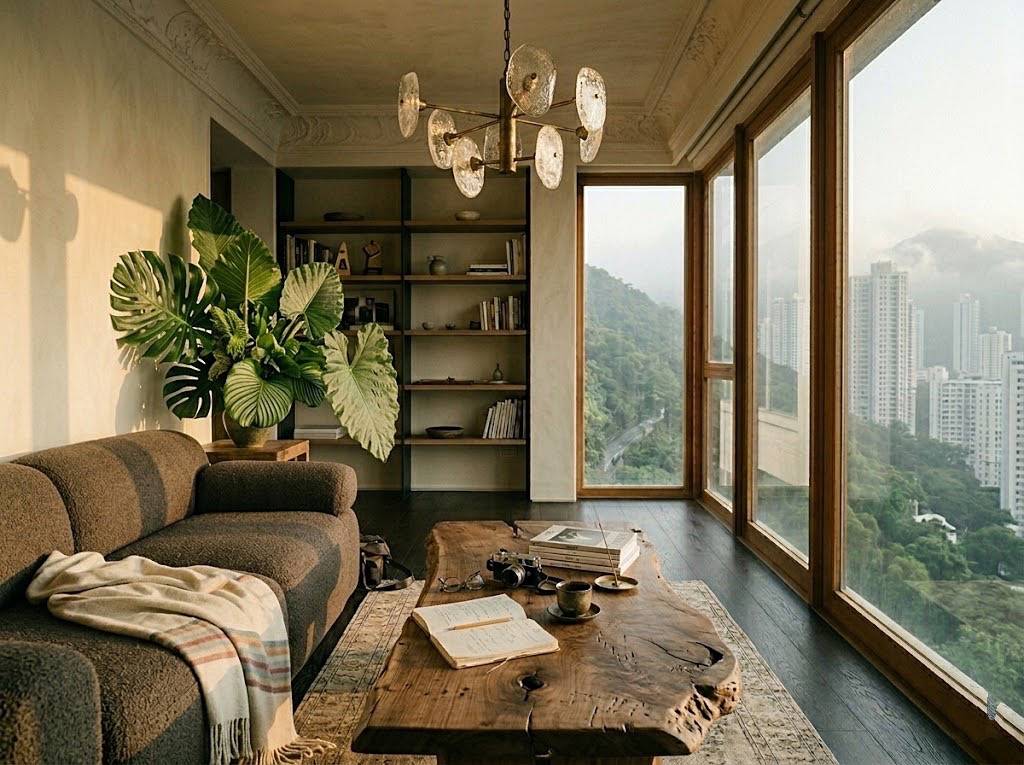
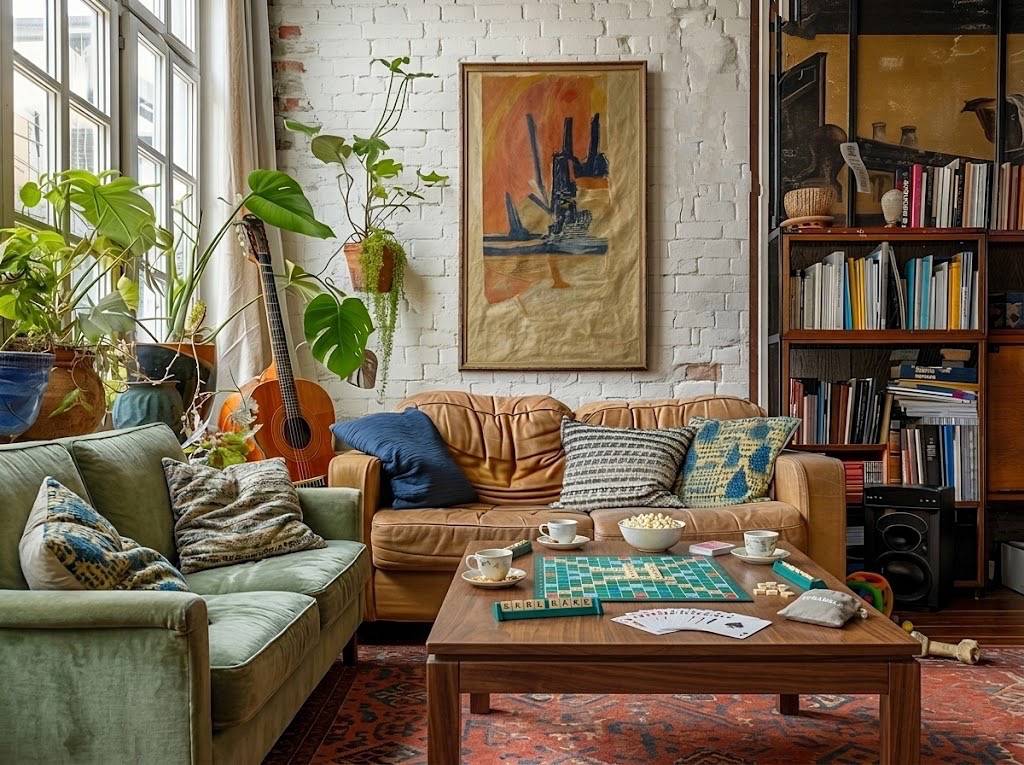
What makes the living room feel like home? Is it the rhythm it holds, or the way it lets you be?
- How does your living room reflect your life?
- Does it invite laughter, contemplation, creativity?
- What makes it feel like the heart of your home?
Scents to explore for your living room
The living room is the room people stay in. A scent here has time to settle. Different oils settle into different rooms.
Sweet Orange
bright, round, briefly there. The citrus that smells like a child's idea of warmth. Suits rooms where people talk over each other.
Cinnamon
warm, dry, with a sweetness from bark rather than sugar. The spice that travels: it reaches rooms it is not in and makes them feel occupied. Belongs to the living room because it belongs to everyone in the house at once.
Bergamot
a green citrus, slightly bitter. The first note in many perfumes, a good first note in this room, where it opens the air before talk follows.
Patchouli
earthy, with leather at the base, deep. A base note that makes other things last longer. Suits rooms with books in them; old paper and patchouli sit well together.
Each one can stand alone in a diffuser. One oil is enough. Composed Self-Place Bond synergy blends for rooms like this one are being remade: the second edition is in development.
The 4 on the scent wheel
- Sweet Orange Citrus · top note
- Cinnamon Spicy · middle to base note
- Bergamot Citrus · top note
- Patchouli Earthy / Rooty · base note
Explore other spaces
The spaces here are conceptual examples. Yours will look different, and that difference is part of what makes it yours.