Where does your home hold feeling?
Kitchen
A hearth of creativity & connection
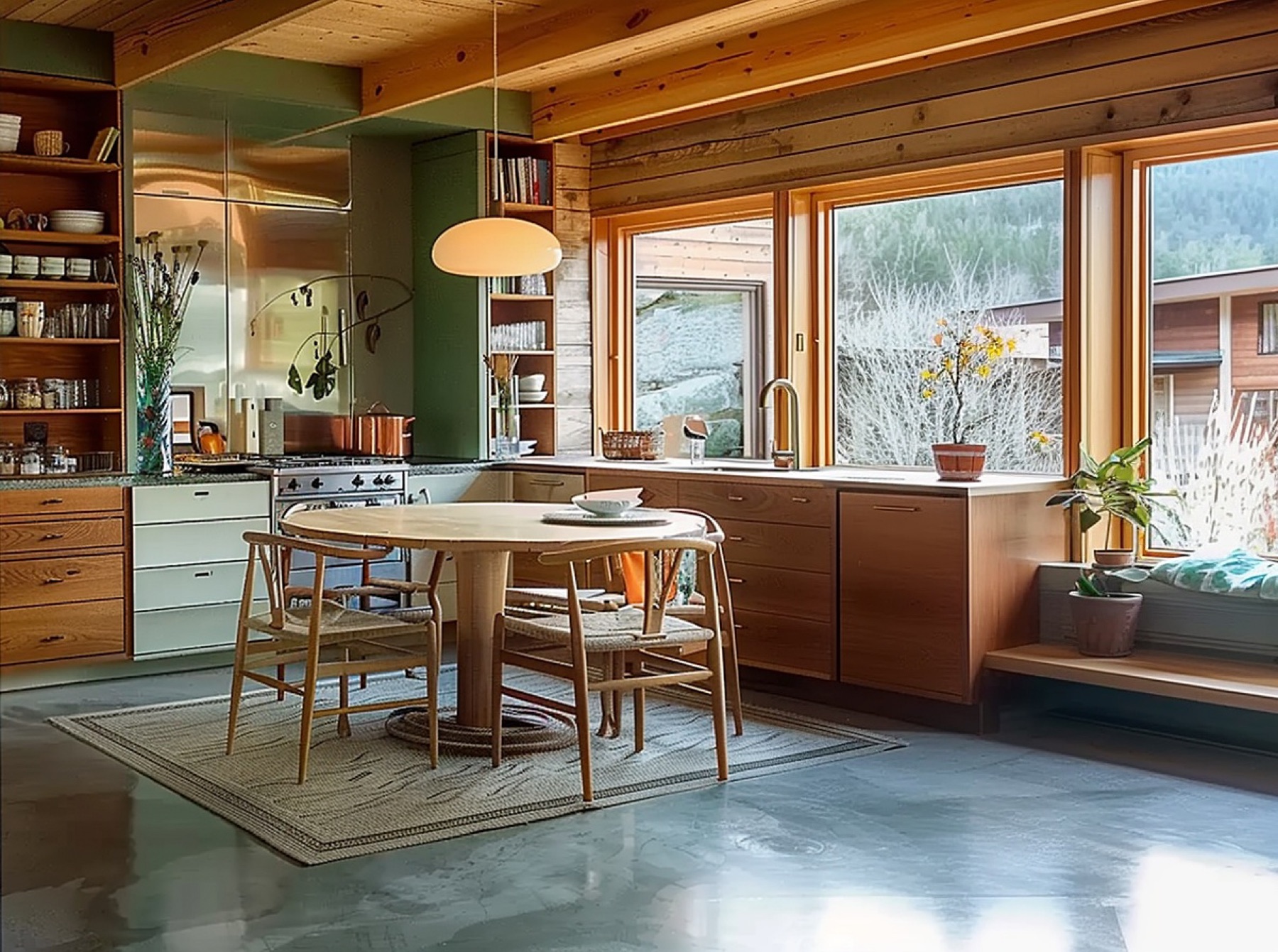
The kitchen's emotional topography
Six in the morning, and the kitchen is barely awake. You move through muscle memory: kettle, cup, the same three steps you could do blind. By six in the evening, it's a different room. Faster hands, overlapping voices, heat rising from the stove, someone reaching past you for a spoon. Later, after everyone's gone, it's just you and the sound of water running, wiping down surfaces, noticing the quiet.
These aren't different kitchens. It's one space holding multiple feelings.
Where recipes get passed down without being written. Where chopping vegetables becomes conversation. Where the smell of something simmering tells you: stay.
Kinship
In a kitchen, this shows up in how the space lets people be together. An open layout makes togetherness unavoidable: you're cooking, someone's talking, a child's doing homework at the counter, and everyone's in each other's orbit. Some kitchens close off behind a door. You choose when to emerge. A table always set for one more says: pull up a chair. A galley kitchen built for one says: this is my space, my rhythm. Both are kinship, just in different languages.
Stimulation
Maybe it's the spices you see every time you open a cabinet, making you want to try something new. Maybe it's the light above the sink that makes washing dishes feel less like a chore and more like a pause. It could be open shelves where colourful ingredients catch your eye. Or it might be the opposite: everything organised, every tool easy to find, where the creativity comes from repetition rather than novelty, from knowing exactly where things are.
Productivity
Some kitchens are choreographed. Prep space near the stove, everything within arm's reach, movements that feel practised and sure. Others are slower, more wandering. Making bread takes three hours and that's the point. Productivity doesn't always mean speed. Sometimes it means having permission to take your time without feeling like you're doing it wrong.
- What does your kitchen ask of you? And is that what you need?
- How does your kitchen nourish not just the body, but the heart and mind?
- What else happens here besides cooking?
Scents to explore for your kitchen
The kitchen already has scent: onion, garlic, simmering stock, citrus zest, the bottom of a coffee pot. A diffused oil here doesn't perfume the air; it joins the cooking.
Lemon
Bright, sharp, bitter at the edge of the rind. The citrus most kitchens already know: in zest, in cleaning, in tea. Suits the kitchen at six in the morning, when the room is opening.
Basil
Green, peppery, with liquorice in its tail. The herb that tells you tomatoes are coming, or pesto is being made. Belongs in the kitchen where cooking is happening, not finished.
Ginger
Warm, dry, with bite. A root the kitchen knows from many cuisines: stir-fry, curry, gingerbread. Suits the kitchen that travels.
Cinnamon
Warm, sweet-edged, ancient. The spice that announces baking before anything has left the oven. Belongs to the kitchen as the room the whole house moves towards.
Each one can stand alone in a diffuser. One oil is enough. Composed Self-Place Bond synergy blends for rooms like this one are being remade: the second edition is in development.
The four on the scent wheel
- Lemon Citrus · top note
- Basil Herbaceous · top to middle note
- Ginger Spicy · middle note
- Cinnamon Leaf Spicy · middle to base note
Between them they cover top, middle and base. Ginger and cinnamon share a family, so they sit together easily; lemon comes from across the wheel and gives the set its bright contrast. Try a pairing for a single room on the wheel.
Explore other spaces
The spaces here are conceptual examples. Yours will look different, and that difference is part of what makes it yours.